

Researchers at Wharton identified something called the "fresh start effect": people are far more likely to pursue goals after "temporal landmarks", like a new year, a birthday, or the start of a season. Google searches for "diet" and gym visits both spike after these moments.
September is a landmark we've been trained on since childhood: new school year, new notebooks, new you. Your brain already treats it as a restart. You just need to use it.
You've heard it a hundred times: it takes 21 days to build a habit. It doesn't. A well-known study from University College London followed people building new daily habits and found it took 66 days on average, with a range of 18 to 254 days.
The same study found something even more freeing: missing a single day didn't derail the habit. So if you've been quitting the moment you slip, stop. Start this week and you'll be on autopilot around early December, just in time to walk into the holidays already ahead.
The rule for your September reset: consistency beats intensity. Five small wins, repeated, will outperform one heroic week every time.
This is the one almost everyone gets backwards. Late summer sunsets shift your internal clock later, and forcing an early bedtime usually means lying awake scrolling.
Instead, anchor your wake-up time, the same time every day, weekends included. Then get outside light within 30 minutes of waking, even on a cloudy morning. Morning light is the strongest signal your body clock has, and within a week or two your natural sleepiness will start arriving earlier on its own.
Why it matters: adults need 7 or more hours a night. Short sleep increases hunger hormones and cravings for sugary, high-calorie foods. Poor sleep isn't a willpower problem, it's a biology problem.
Quick wins:
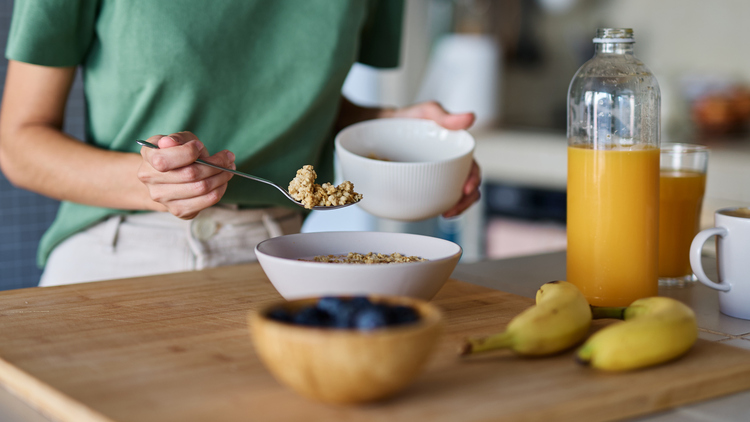
A coffee and a granola bar. Or nothing at all until noon. Sound familiar? Many women front-load carbs and back-load protein, eating most of it at dinner. That's a recipe for a 3 p.m. crash and a 9 p.m. pantry raid.
Aim for 25 to 30 g of protein at breakfast. Protein keeps you full longer, steadies energy, and helps protect muscle, which matters more every year after 30. Active women generally do well with about 1.2 to 1.6 g of protein per kg of body weight per day, spread across meals.
Then add the nutrient most women are quietly missing: fiber. The recommendation is about 25 g a day for women, and most of us get roughly half that. Fiber feeds your gut, keeps you regular, and blunts blood sugar spikes.
Easy swaps:
If you do only one new thing this fall, make it this. After about age 30, we gradually lose muscle mass, and for women, the drop in estrogen around perimenopause and menopause speeds up both muscle and bone loss.
Strength training is the antidote. It builds bone density, improves blood sugar control, supports your metabolism, and makes everyday life (stairs, groceries, kids) feel easier. And "bulky" is a myth: women have far less testosterone, so what you'll actually get is strong, firm, and capable.
The World Health Organization recommends 150 minutes of moderate activity per week plus muscle-strengthening on 2 or more days. That's it. Not two hours a day.
Your starter plan (20-30 minutes, twice a week):
Do 2-3 rounds of 10-12 reps. When it feels easy, add weight. On other days, walk. A brisk daily walk is still one of the most underrated health habits there is.
Here's something nobody tells you in September: if you live in a northern city (think Montreal, Toronto, Chicago, London), from roughly October to March the sun is too low for your skin to make meaningful vitamin D. The reserves you built this summer start draining now.
Low vitamin D is linked to fatigue, low mood, and weaker bones, and it's one reason the "winter blues" hit so hard. It's especially important for women because of our higher lifetime risk of osteoporosis.
What to do:
In summer, the heat reminds you to drink. When temperatures drop, thirst cues fade, and many of us drift into mild dehydration without noticing. Even mild dehydration can cause headaches, brain fog, fatigue, and cravings that feel a lot like hunger.
A general guide for women is about 2.7 liters of total fluid a day from all drinks and food, more if you exercise or sweat a lot.
Make it automatic:
And a quick honesty moment: if summer came with a lot of "just one more drink", September is a great time for a few alcohol-free weeks. Better sleep and fewer cravings usually show up fast.
Don't try to do everything at once. Stack one habit per day and keep the ones before it.
Day | Add this habit | Time it takes |
| 1 | Set one fixed wake-up time | 1 minute |
| 2 | 10 minutes of morning daylight | 10 minutes |
| 3 | Water before coffee + a desk bottle | 2 minutes |
| 4 | A 25-30 g protein breakfast | 10 minutes |
| 5 | First strength session | 20-30 minutes |
| 6 | A 30-minute walk + add beans, lentils or veggies to one meal | 30 minutes |
| 7 | Plan next week: groceries, 2 workout slots, bedtime alarm | 20 minutes |
After day 7, just repeat. Miss a day? Pick it back up the next one. Remember: the research says one slip doesn't break a habit. Quitting does.
You don't need a detox, a 30-day challenge, or a brand-new personality. You need a handful of small, boring, powerful habits: a steady wake-up time, protein and fiber on your plate, strength training twice a week, enough vitamin D, and a water bottle within reach.
Start this week, and by the time the first snow falls, these won't be habits you're forcing. They'll just be who you are.
Save this article, send it to the friend who keeps saying "I'll start Monday", and make this September the one that actually sticks.
This article is for general information and isn't a substitute for advice from your doctor or a registered dietitian, especially if you're pregnant, have a medical condition, or take medication.
Please fill in your details to start.
Hi there! 👋
I am Revolution Nutrition's customer support! How are you today?