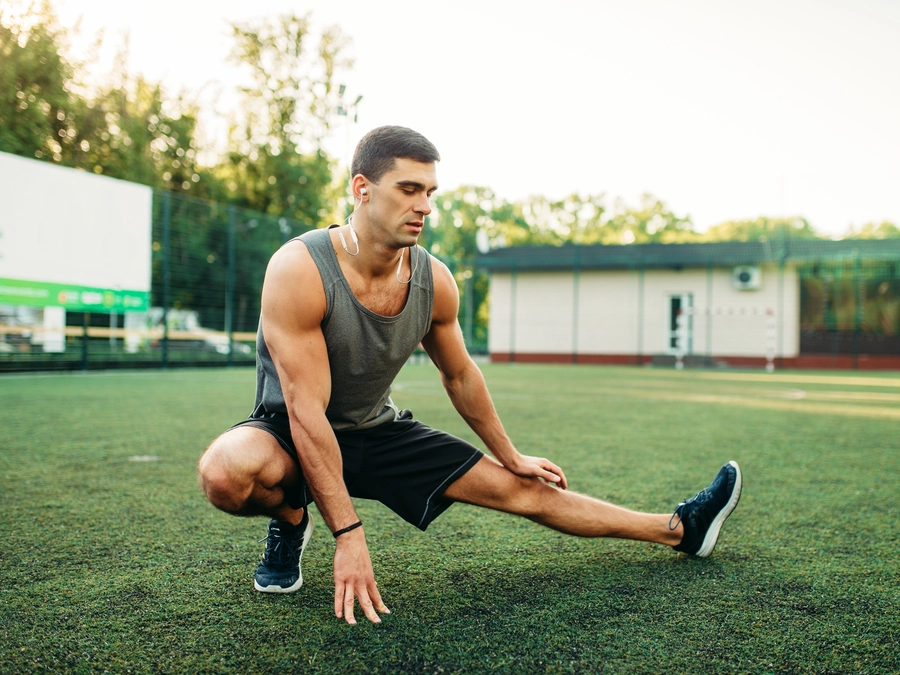
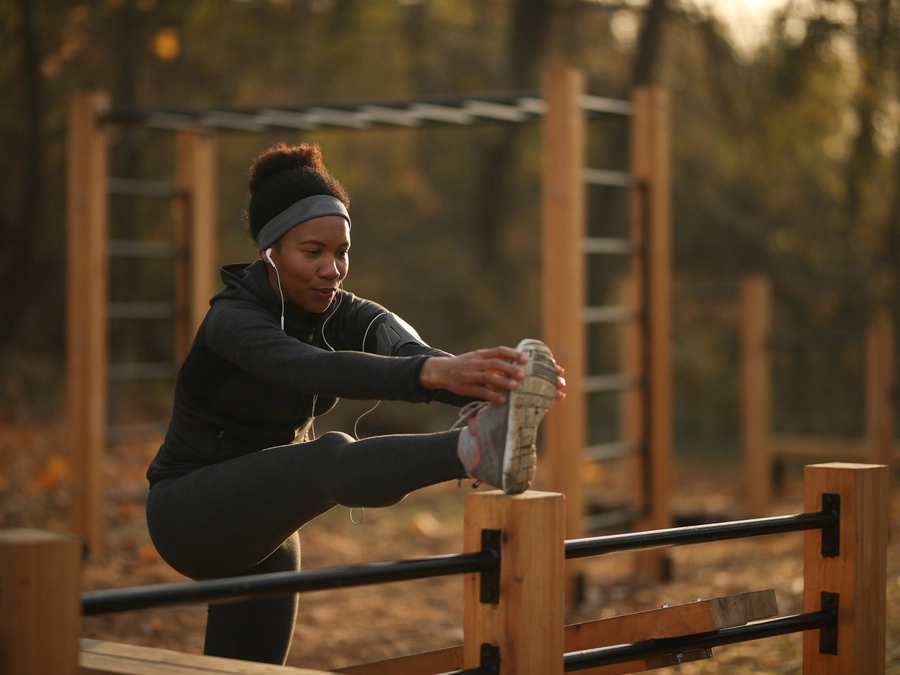
Which is exactly why the next few weeks matter. Late September is arguably the best stretch of the year for outdoor workouts: the humidity has broken, the temperature sits in that perfect 12–18°C training window, and the parks and trails are emptier than they've been since May. Don't waste it.

Training outside isn't just a change of scenery — it changes the workout itself.
Your body works harder without trying. Uneven ground, wind resistance, and inclines recruit stabilizing muscles that a flat gym floor never touches. A 30-minute trail run demands more from your ankles, hips, and core than 30 minutes on a treadmill at the same pace.
The mental return is real. Research consistently links outdoor exercise with bigger drops in tension and fatigue than the same session performed indoors. People also report enjoying it more — and enjoyment is what makes you come back tomorrow.
You bank vitamin D while you still can. In Canada, meaningful sun exposure essentially shuts off from October through March. Every outdoor session between now and then is a deposit.
It's free and it's flexible. No membership, no commute, no waiting for equipment. A park bench and a set of stairs is a full gym if you know what to do with them.
1. The park bench circuit (full body, 25 minutes)
Pick a bench and run four rounds of: 12 step-ups per leg, 10 incline push-ups with hands on the seat, 15 bench dips, 20 alternating split squats, and a 45-second plank with feet elevated. Rest 60 seconds between rounds. Simple, brutal, no equipment.
2. Hill sprints (conditioning, 20 minutes)
Find a hill that takes 15–20 seconds to run up hard. Sprint up, walk down, repeat 8–12 times. Hills are a built-in safety mechanism — they limit your stride and make sprinting far less injury-prone than flat-ground all-out efforts. This is the single most time-efficient conditioning session on the list.
3. Stair intervals (legs and lungs, 30 minutes)
Any long public staircase works. Alternate: one ascent taking every step at a fast pace, walk down, one ascent taking every second step, walk down. Eight to ten rounds. Your quads will file a complaint by round five.
4. A long trail hike or ride (aerobic base, 60–120 minutes)
Low intensity, long duration, ideally on a weekend morning. This is the session people skip because it doesn't feel hard enough — and it's the one that builds the aerobic engine everything else sits on. Bonus: fall foliage is peaking in most of the country over the next three weeks.
5. The playground calisthenics session (strength, 35 minutes)
Monkey bars for pull-ups or hangs, a low bar for inverted rows, the ground for push-ups and lunges. Three rounds of 6–8 pull-ups (or 20-second hangs), 12 rows, 15 push-ups, 20 walking lunges, and a 40-second hollow hold.

Warm up longer than you did in July. Cooler air means stiffer tissue. Give yourself 8–10 minutes of progressive movement — leg swings, walking lunges, arm circles, a few easy build-up efforts — before anything intense. This is where most early-fall strains come from.
Don't let cool weather fool you about hydration. You sweat plenty in 14°C, you just notice it less because it evaporates fast. For sessions over an hour, or any hard effort, having electrolytes in your water helps you hold onto fluid rather than passing it straight through — particularly if you're training fasted in the morning.
Have a plan for after. Outdoor sessions tend to end far from your kitchen, which is how a good workout turns into four hours of under-eating. Throw a shaker with protein in your bag, or keep something portable in the car. Getting 25–30g of protein in within an hour or two of training is the least complicated thing you can do for recovery.
Dress in layers you can shed. You'll be cold for the first five minutes and too warm for the next forty. A light long-sleeve you can tie around your waist solves it.
The trap is treating the end of summer as the end of outdoor training. It isn't — it's just the end of easy outdoor training. A few adjustments extend your season by two full months:
Summer's last good stretch is right now, not in some vague future weekend. Pick two of the workouts above, put them on the calendar this week, and get out there while the getting is good.
Please fill in your details to start.
Hi there! 👋
I am Revolution Nutrition's customer support! How are you today?