Welcome
It looks like you are in United States (US), would you like to visit our US site?

No, keep me on Revolution Nutrition Canada


Revitalize your workday with the Chair Flexibility Challenge! Perfect for office workers, this fun and easy routine helps combat stiffness and boost productivity.
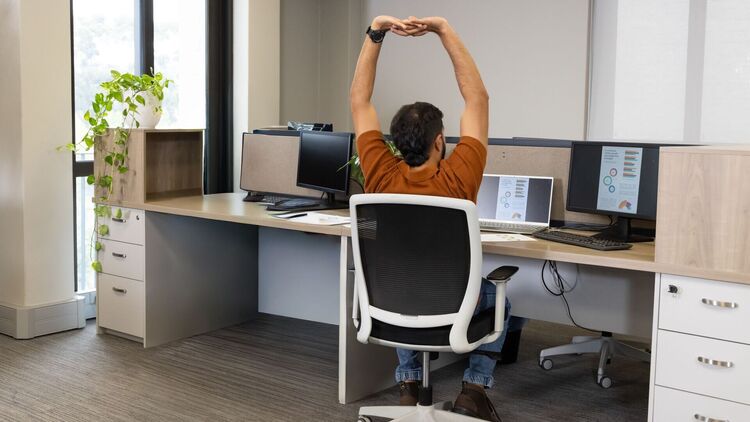
In an age where desk jobs are more prevalent than ever, the importance of maintaining flexibility cannot be overstated. Office workers often spend long hours seated in front of computers, leading to a sedentary lifestyle. This lack of movement can result in muscle stiffness, reduced range of motion, and overall discomfort. Flexibility plays a crucial role in counteracting these effects by enhancing muscle elasticity, improving joint mobility, and promoting better posture.
Maintaining flexibility is not just about being able to touch your toes; it’s about preserving your body's natural range of motion and ensuring that your muscles and joints function optimally. When your muscles are flexible, you reduce the risk of strains, sprains, and other injuries. Improved flexibility can also alleviate chronic pain, particularly in the lower back and neck, which are common areas of discomfort for office workers.
Furthermore, flexibility exercises can provide mental benefits, such as reduced stress and improved focus. By incorporating regular stretching and movement into your workday, you can break up the monotony of sitting for extended periods, thereby boosting your overall productivity and well-being. The Chair Flexibility Challenge offers a simple yet effective way to integrate these crucial movements into your daily routine, making it easier to maintain your health and vitality.
Office workers face a myriad of flexibility issues due to prolonged periods of sitting and repetitive movements. One of the most common problems is tight hip flexors. When you sit for long durations, your hip flexors remain in a shortened position, leading to tightness and reduced mobility. This can cause discomfort and even contribute to lower back pain.
Another prevalent issue is shoulder and neck stiffness. Hunched over keyboards and screens, many office workers develop poor posture, leading to rounded shoulders and forward head posture. This can strain the neck muscles and upper back, resulting in stiffness and discomfort. Over time, this poor posture can lead to more serious conditions such as text neck and tension headaches.
Additionally, sitting for extended periods can cause hamstring tightness. When your legs remain bent for long periods, the hamstrings can become tight and less flexible. This not only affects your ability to perform basic movements but can also contribute to lower back pain. Addressing these common flexibility issues through targeted exercises is essential for maintaining overall health and preventing long-term problems.
Incorporating flexibility exercises into your daily routine doesn't have to be complicated or time-consuming. The key is to find moments throughout your day where you can take a break from sitting and perform a few simple stretches. Start by setting a timer to remind yourself to move every hour. This can be as simple as standing up, stretching your arms overhead, and taking a few deep breaths.
One effective way to integrate flexibility exercises into your workday is to pair them with existing habits. For example, you can perform a quick stretch every time you finish a task or during phone calls. This not only helps break up long periods of sitting but also makes it easier to remember to stretch regularly.
Another strategy is to designate specific times for flexibility exercises, such as during your morning routine, lunch break, or before you leave for the day. Consistency is key, so find a schedule that works for you and stick to it. Even just a few minutes of stretching each day can make a significant difference in your overall flexibility and comfort.
The Chair Flexibility Challenge includes a variety of exercises that can be performed right from your chair or desk. Here are some key exercises to get you started:
Sit at the edge of your chair with your feet flat on the floor. Slowly bend forward, reaching your hands towards your feet. Hold this stretch for 15-30 seconds, feeling the stretch in your hamstrings and lower back. Return to an upright position and repeat.
Sit up straight with your feet flat on the floor. Slowly tilt your head to one side, bringing your ear towards your shoulder. Hold for 15-30 seconds, then switch sides. This stretch helps to relieve tension in the neck and shoulders.

Sit with your feet flat on the floor and your back straight. Place your right hand on the back of your chair and your left hand on your right knee. Gently twist your torso to the right, looking over your shoulder. Hold for 15-30 seconds, then switch sides. This stretch helps to improve spinal flexibility and relieve lower back tension.
Sit at the edge of your chair with your feet flat on the floor. Extend one leg back, keeping the other foot flat on the floor. Press your hips forward, feeling the stretch in the front of your hip. Hold for 15-30 seconds, then switch sides. This stretch helps to relieve tight hip flexors.
Sit up straight with your feet flat on the floor. Reach one arm across your body, using your other hand to gently pull it closer. Hold for 15-30 seconds, then switch sides. This stretch helps to relieve shoulder tension and improve flexibility.
Sit at the edge of your chair with your feet flat on the floor. Extend one leg out in front of you, flexing your foot so your toes point towards the ceiling. Lean forward slightly, feeling the stretch in your calf. Hold for 15-30 seconds, then switch sides. This stretch helps to relieve calf tightness and improve flexibility.
Improved flexibility offers numerous benefits for office workers, both physically and mentally. Here are some key benefits:
Regular stretching can help alleviate common areas of discomfort, such as lower back pain, neck stiffness, and shoulder tension. By addressing these issues, you can improve your overall comfort and reduce the risk of developing chronic pain.
Improved flexibility enhances your range of motion, making it easier to perform everyday tasks and movements. This can lead to better posture, reduced risk of injury, and improved overall physical function.
Taking breaks to stretch and move can help boost your energy levels and improve focus, leading to increased productivity. Regular movement can also help reduce stress and improve mental clarity, making it easier to stay on task.
Stretching and flexibility exercises can help correct poor posture and prevent the development of postural imbalances. This can lead to better alignment, reduced strain on your muscles and joints, and improved overall health.
Regular stretching and movement can help reduce stress, improve mood, and promote relaxation. Incorporating these exercises into your daily routine can help you feel more balanced and focused throughout the day.
The Chair Flexibility Challenge offers a simple and effective way for office workers to improve their flexibility, reduce discomfort, and enhance their overall well-being. By incorporating these exercises into your daily routine, you can combat the negative effects of prolonged sitting and enjoy a healthier, more comfortable work life.
Whether you're dealing with tight hip flexors, neck stiffness, or lower back pain, the Chair Flexibility Challenge provides targeted exercises to address these common issues. With just a few minutes of stretching each day, you can experience significant improvements in your flexibility, posture, and productivity.
So why wait? Embrace the Chair Flexibility Challenge today and take the first step towards a healthier, more flexible, and more productive work life. Your body and mind will thank you.
Please fill in your details to start.
Hi there! 👋
I am Revolution Nutrition's customer support! How are you today?