Welcome
It looks like you are in United States (US), would you like to visit our US site?

No, keep me on Revolution Nutrition Canada

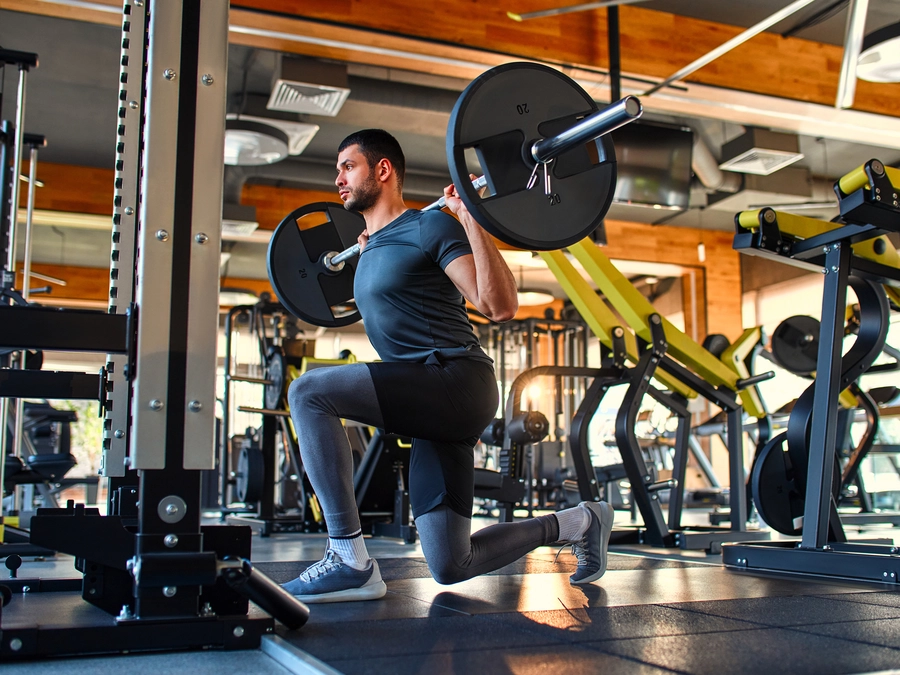
You've felt it. Twenty minutes after your pre-workout, your face and hands start to tingle like you just touched a live wire. That's beta-alanine — and it's in almost every pre-workout on the shelf.
But here's the question nobody on the label answers: does it work the same for someone in their first month of lifting as it does for someone with ten years under the bar?
The research says no. And the answer isn't the one most people expect.
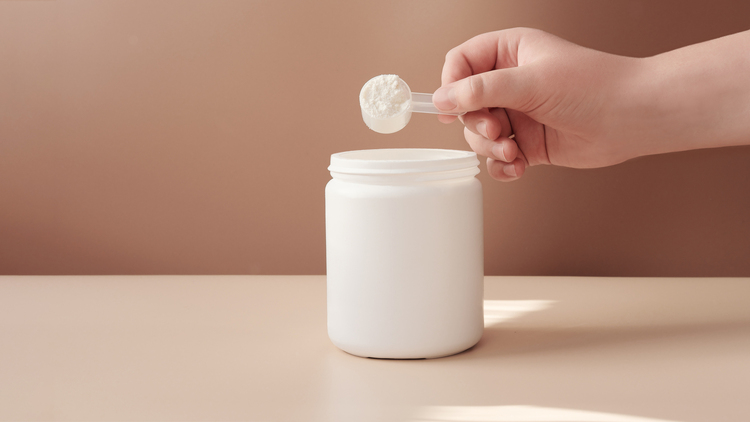
Beta-alanine doesn't give you energy. It doesn't pump you up. Its real job happens quietly, inside your muscle.
Your body combines it with another amino acid to make carnosine, a molecule that soaks up the acid that builds up when you push hard. That acid is a big part of the burn that makes you rack the bar before your muscles are truly done.
More beta-alanine means more carnosine. More carnosine means you can tolerate a few more seconds — or a few more reps — of high-intensity work.
Three things matter here:
Here's the surprising part. In the largest meta-analysis on beta-alanine, which pooled dozens of studies, untrained people showed bigger performance gains than trained people.
Why? Beginners start with less built-in acid-buffering capacity. Their muscles haven't yet adapted to hard, burning efforts. So adding extra carnosine fills a bigger gap.
But before you rush to the checkout, there's a catch.
When you're new to lifting, everything works. Your strength can climb week after week just from learning the movements and showing up. That's the famous "newbie gains" phase.
In that phase, beta-alanine is a nice extra — not a game changer. Sleep, protein, consistent training and progressive overload will move the needle far more. A beginner who skips workouts but takes beta-alanine every day will lose to a beginner who trains hard with no supplements at all.
Beginner verdict: it can help, especially if your workouts include circuits, high-rep sets or conditioning. Just don't expect it to replace the fundamentals.
Years of hard training already raise your muscles' natural buffering capacity. Researchers have suggested that this is why some studies in highly trained athletes found little measurable benefit — there's simply less room left to improve.
So is beta-alanine useless once you're experienced? Not even close.
A 2024 meta-analysis looked only at trained young men doing all-out efforts lasting 30 seconds to 10 minutes. Beta-alanine still beat placebo, with a small-to-moderate effect. The benefit showed up after about 4 weeks, and the clearest results came at the higher dose of 5.6–6.4 g per day.
And here's what makes it matter: advanced lifters live and die by small margins. A beginner adds 10 kg to their squat in a month without trying. An advanced lifter fights for 2.5 kg over a whole training block.
When progress is that hard to earn, one or two extra reps on your last high-volume set, or a slightly faster conditioning time, is a real edge.
Advanced verdict: the effect is smaller on paper, but it's worth more in practice — as long as you load it properly and your training actually includes efforts in its sweet spot.

Here's the part almost nobody talks about. Research has found that muscles that are being trained load carnosine more effectively than muscles that aren't, when both get beta-alanine. (Bex et al., 2014)
In other words, beta-alanine and hard training are a team. The supplement isn't doing the work for you — it amplifies the work you're already doing. Take it and sit on the couch, and you're wasting your money at any experience level.
Beginner (under ~1 year) | Advanced (several years+) | |
| Natural buffering capacity | Lower | Higher from years of training |
| Size of benefit in studies | Larger | Smaller, but still real |
| How much it matters for progress | Low — newbie gains dominate | High — small margins decide plateaus |
| Best use | Circuits, high-rep sets, conditioning | High-volume blocks, drop sets, HIIT, peaking for events |
| Bigger priorities first | Consistency, protein, sleep, technique | Programming, recovery, then supplements |
So, does experience level change the benefit? Yes — but in two opposite directions. Beginners get a bigger bump in the lab. Advanced lifters get more value out of every bit of it in real life.
The rules are the same whether you're a beginner or a veteran:
Want to stack it? The same 2017 meta-analysis found that combining beta-alanine with sodium bicarbonate produced the largest effect of all.
As with any supplement, check with your doctor first if you have a health condition or take medication.
Beta-alanine isn't a beginner supplement or an advanced supplement. It's a hard-work supplement.
If you're new, it's a small bonus on top of the gains you're already making — so nail the basics first. If you're experienced, it's one of the few legal, well-studied tools that can still squeeze out those last stubborn reps.
Either way, the tingle is just the opening act. The real results show up weeks later, in the sets where you used to quit.
Please fill in your details to start.
Hi there! 👋
I am Revolution Nutrition's customer support! How are you today?